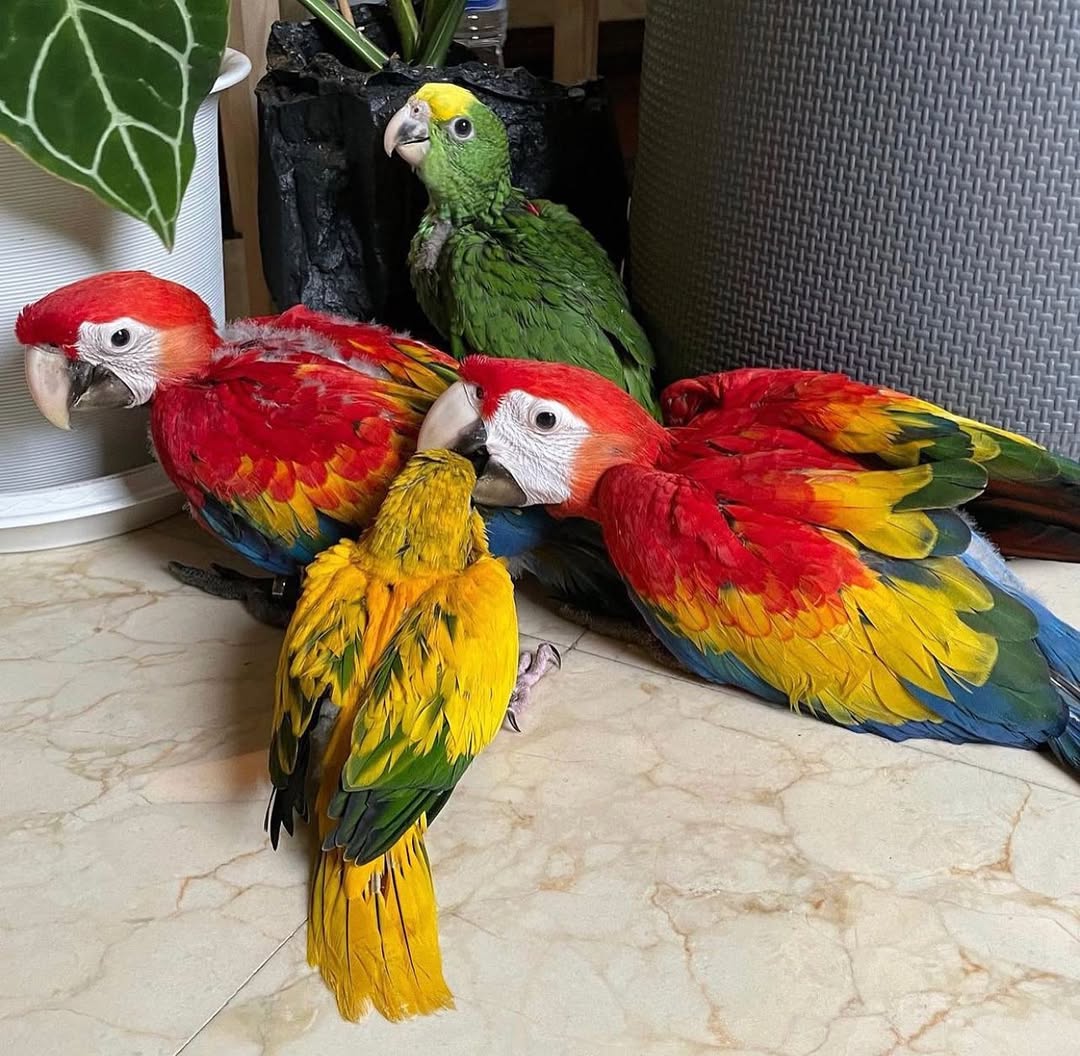
What should you look for when buying a macaw parrot?
Buying a macaw is a huge deal—honestly, it’s more like adding a permanent, loud, and very smart toddler to your family than just “buying a pet.” At MACAW PARROTS FOR SALE HOME, I’ve seen that the most successful owners are the ones who look past the beautiful feathers and focus on the health, history, and “social education” of the bird. You want a macaw that is bright-eyed, curious, and comfortable with humans, but you also need to see the paperwork to back it up.
A reputable breeder should be able to provide clear health certificates, proof of a diverse diet (not just seeds!), and evidence that the bird was weaned at its own pace rather than on a forced schedule. If a seller won’t let you see where the bird was raised or can’t tell you exactly what it’s been eating, that’s a major red flag that you might be dealing with a bird that will have health or behavioral issues for years to come.
Key Takeaways
- Visual Health: Look for clear eyes, clean nostrils, and smooth, vibrant feathers without “stress bars.”
- The “Vibe” Check: A healthy baby should be inquisitive and active, not huddled in a corner or lethargic.
- Documentation: Always ask for CITES certificates (especially for Scarlets or Militarys) and recent avian vet records.
- The Breeder Test: A good breeder will interview you as much as you interview them to ensure the bird is going to a good home.
- Diet History: Ensure the bird has been exposed to a variety of fresh foods, sprouts, and high-quality pellets, not just a cheap seed mix.
Evaluating the Bird’s Physical and Mental Health
When you’re standing in front of a potential new family member, it’s easy to get distracted by how stunning they are. But as a breeder, I’m looking at the small details. First, check the “vents”—the area under the tail. It should be clean and dry; any matting or staining is a sign of digestive issues. I always tell folks at MACAW PARROTS FOR SALE HOME to look at the bird’s posture. Is it standing tall on both feet? Does it have a “grip” when it steps up?
Mentally, you want a bird that is socialized. A bird that cowers in the back of the cage or immediately tries to take a finger off might not have been handled properly during its formative weeks. I remember a Blue and Gold we had that was a bit of a “hand-shy” case from another breeder; it took months of patient work to get him to trust a human hand again. You want to see a baby that is interested in you—maybe even a bit “beaky” and playful. That’s a sign of a confident, well-adjusted macaw.
Choosing the Right Source: Breeder vs. Pet Store
Where you buy your bird is just as important as which bird you buy. Personally, I’m a bit biased toward specialized breeders, but there are some great boutique bird shops out there too. The key is transparency.
- Ask to see the parents: While you might not be allowed in the actual nesting room (parents can be protective!), a breeder should be able to show you the lineage or photos of the parents. This tells you about the bird’s genetic potential and temperament.
- The “Clean” Test: Look at the water bowls and the cage floor. If the environment is filthy, the bird’s immune system is likely already compromised. At MACAW PARROTS FOR SALE HOME, we clean constantly because a macaw’s respiratory system is incredibly sensitive.
- Red Flags: Avoid anyone selling “unweaned” babies. If someone tells you that hand-feeding the bird yourself will make it bond better, they are either lying or uninformed. Hand-feeding a macaw is dangerous for the bird if you aren’t an expert, and “forced weaning” can cause lifelong psychological trauma and stunted growth.
The Paperwork You Absolutely Need
You wouldn’t buy a car without a title, right? A macaw is a living investment. You need to make sure the legalities and health are documented.
- Hatch Certificate: This proves the bird was captive-bred in the U.S. and not smuggled.
- DNA Sexing: Unless you want to wait 5 years to find out if “Charlie” is a girl, get the DNA certificate.
- Avian Vet Exam: A reputable seller will have a “health guarantee” that gives you 48–72 hours to take the bird to your own avian vet for a full “well-bird” checkup, including blood work for common diseases like PBFD and Psittacosis.
- CITES Article 10 (If applicable): For species like the Scarlet or Military Macaw, this paperwork is essential if you ever plan to move or travel with your bird.
Questions to Ask the Breeder Before You Commit
I love it when customers come to MACAW PARROTS FOR SALE HOME with a list of questions. It shows they care. Here are the ones I think are most important:
- “What was the weaning process like?” You want a bird that weaned onto solids naturally, not one that was “starved” into eating pellets.
- “How much daily human interaction does this baby get?” A bird that sits in a back room all day won’t be a good pet.
- “What are its favorite foods?” You’ll want to keep their diet consistent for the first few weeks to avoid digestive stress.
- “Has the bird been exposed to other pets or children?” This helps you know how much “socializing” work you have left to do.
Conclusion
Buying a macaw is a life-altering event. If you look for a bird that has been raised with love, fed a gourmet diet, and comes with a “clean bill of health” from an avian vet, you are setting yourself up for decades of joy. At MACAW PARROTS FOR SALE HOME, we pride ourselves on being an open book. We want you to feel 100% confident that your new macaw is the healthiest, happiest version of itself. Take your time, ask the “annoying” questions, and listen to your gut. If a deal feels too good to be true, it probably is.
Frequently Asked Questions
Is it better to buy a baby macaw or adopt an older one?

This really depends on your experience level. A baby from MACAW PARROTS FOR SALE HOME allows you to “mold” the bird’s personality from day one, which is great for beginners. However, adopting an older macaw can be incredibly rewarding because their personality is already set—you know exactly who they are. The downside is that older birds may come with “baggage” or health issues from previous poor care, so you really have to do your homework.